Chris Robertson serves as associate director of leadership development for Made to Flourish. Originally from Cleveland, Ohio, Chris received his bachelors of science in Bible from Cornerstone University. Most recently Chris served as project manager for Acton Institute in Grand Rapids, Michigan.
Chris and his wife, Rebecca, live in Kansas City along with their two children.
Chris is passionate about helping pastors and their congregations understand the importance of all work to the advancement of God’s kingdom in this world.
My ears perked up one morning recently when I heard a new report that France, the land of much vacation time and the 35-hour work week, passed a new law giving workers the “right to disconnect” outside of work hours. According to Maggie Penman at NPR, “companies with more than 50 employees will be obligated to set up hours when…
Eleven years ago Jena Lee Nardella was a graduate from Whitworth College with the dream of eradicating HIV/AIDS and delivering clean water throughout Africa to those who desperately needed it and were dying without it. These dreams, along with the passion and support from Jars of Clay, led to the formation of Blood:Water Mission. I have been familiar with Blood:Water…
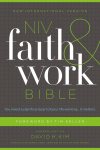
The Green Room welcomes Joseph Sunde with his review of the NIV Faith and Work Bible, reprinted from the Acton PowerBlog. Joseph Sunde is a writer and project coordinator for the Acton Institute, editor of the For the Life of the World: Letters to the Exiles blog and content manager of the blog Oikonomia at Patheos.com. He resides in Minneapolis, Minnesota with his wife and…
Chris Horst is the vice president of development for HOPE International. He is passionate about issues of faith and entrepreneurship. He is also the author of Mission Drift and Entrepreneurship For Human Flourishing. He blogs regularly and has recently posted an article reflecting on his early jobs and the importance of work. Horst discusses a job he had at a friend’s…
The Oikonomia Network has recently produced some great videos with different leaders in the faith and work movement speaking on the integration of faith and work from their research and study. These videos are intended to be used in the classroom as well as in the church and other instructional settings where people faith can learn about the integration of their faith with all parts of life.
Chris Armstrong is the founder and director of Opus: The Art of Work based at Wheaton College. Previously, he directed the Bethel Work with Purpose Initiative as well as was professor of church history at Bethel Seminary (St Paul, MN). In addition to Chris’ current work with Opus, he is Senior Editor of Christian History Magazine.
Chris spoke on the topic of vocation from his life, the Bible, and church history. He began with passion and vulnerability, recounting lessons he learned on the value of work and the apparent problem of “work-life balance.”
As a child of the 70’s, Chris confesses to having had a laissez faire view toward work: “Labor is a life-destroying activity.” This attitude would soon put him in a hard place, as during the first few months of his marriage, he was forced to turn to family for financial support. This uncomfortable interlude ended only when one of his college professors offered him a full-time job at a language school.
What strikes me from this story is the sense of self-worth and dignity that Chris felt after he started this job. He had co-workers who now relied on him. He had a sense that he was contributing to the world in a new way. In fact, on most days he could not wait to get to work. If you would have told the younger Chris he would one day have this kind of anticipation for work, he would have thought you were crazy.
“The 70s had lied to me. Work wasn’t life-destroying. It was interesting, energizing, and rewarding.” -Chris Armstrong
At this point, you might think that everything was in order for Chris and he simply proceeded with his work and family life helping everyone in his life to flourish. But soon the flip-flop from dismissal to obsession with work was complete, as he ran up against what his church called “work-life balance issues.” He was told, like so many of us, to put God first, family second, and work third.
But, Chris asks, “Is ‘work-life balance’ really the problem?” Life is not normally as neat and tidy as the simple priority of God over family over work implies. Colossians 3:23 shows a different, more holistic picture: “Whatever you do, work heartily, as for the Lord and not for men… (ESV)”
To illustrate, Chris took us back to some 16th century “work-life struggles,” as addressed by a little-known monk named Martin Luther (!). In response to the way that era saw only monks and priests as having vocations that mattered to God, Luther proposed the radical idea that all work can be God’s work regardless of its apparent sacredness or status.
“When a prince sees his neighbor oppressed, he should think: That concerns me! I must protect and shield my neighbor….The same is true for shoemaker, tailor, scribe, or reader. If he is a Christian tailor, he will say: I make these clothes because God has bidden me do so, so that I can earn a living, so that I can help and serve my neighbor. When a Christian does not serve the other, God is not present; that is not Christian living.” -Martin Luther
What Luther and Armstrong are saying is that all kinds of work, even the mundane, can be done in obedience to God and in service to others. Luther used the word vocation to refer to this work. Unfortunately, words like vocation–as well as stewardship, flourishing, and culture–have been watered down and devalued. From Luther, to Adam and Eve in the garden, to the 6th-century pope and spiritual writer Gregory the Great, Chris unpacks the meaning of the Christian concept of vocation.
I want to note one other important point from Luther’s discussion of vocation: it embraces work done in the home as well as in the marketplace.
My friend Tom Nelson uses some helpful words to describe work. He discusses work in terms of contribution and remuneration. Some work involves contribution to an organization while other can result in remuneration. Both are of equal importance, though work that involves remuneration is oftentimes valued more. Luther and Nelson would both agree that both types of work are critical to flourishing.
As we reflect on the history of the faith and work movement and look toward its future and legacy, the topic of vocation properly defined is a critical area for continued study, reflection, and education. We as leaders need to correctly understand this so that God can use us to teach its importance and relevance to our students as well as the people in the pew.
I’ll leave you here with Armstrong’s closing words:
Now, in my fifties, I’m finally reallyhearing and acting on the “whatever you did” of Jesus, and the “whatever you do” of Paul. I’m hearing Luther’s call to love my neighbor through ordinary work, and Gregory’s call to let my devotion prepare me for my work, and my work for my devotion. Can you hear it too?
Please watch this brief (16-minute) video and share with like-minded folks in your network. If you’re interested to read more about vocation, I’d refer you to Working for Our Neighbor: A Lutheran Primer on Vocation, Economics, and Everyday Life, by Gene Edward Veith.
In addition to featuring thoughtful commentary on the future of the faith and work movement, The Green Room periodically wants to share reports from faith and work meetings you may have missed. (Don’t want to miss any more faith and work meetings? Check out our event calendar.) We recently had a report on the Avodah Summit at Trinity International University:…
We all agree that our work matters. An important aspect to work is its influence and impact within a local community and culture. I have recently read a short book that is, in my opinion, an excellent treatment of culture engagement and I would like to recommend it for your reading. The eBook is titled The Voting Booth: A new…
I was privileged to attend the Avodah Summit this past week at Trinity International University. The purpose of this conference was to give pastors and leaders theological vision and practical tools to help believers connect their faith to their daily work and the flourishing of their communities. The conference speakers included Skye Jethani, Steve Garber, Katelyn Beaty, Greg Forster, Jimmy…
The Green Room Blog welcomes Lisa Slayton with her review of A Woman’s Place: A Christian Vision for Your Calling in the Office, the Home, and the World by Katelyn Beaty. Slayton joined Pittsburgh Leadership Foundation in 2005 to develop a leadership offering, the Leaders Collaborative, that integrated a biblical worldview with vocational discipleship and organizational effectiveness for the flourishing…









 The Green Room