
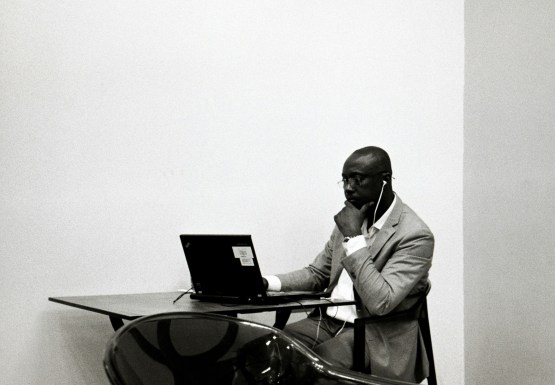
By Harry Mitchell, part one of a series.
Part one of three.
In the post “Being White in the (White) Faith and Work Movement” (originally posted in February 2018), a blogger described himself as a contributing member of a movement whose books, leaders, authors, conferences, and organizations were overwhelmingly white. He wrote as someone who knew the Faith and Work Movement from within and valued its work, but who had begun to recognize the limitations of the world in which its theology had developed. I recognized something that I had been struggling with in his story.
I came across the post in 2023. By then, I had already begun to develop a perspective on why the Faith and Work Movement had such low engagement from Black Christians and Black churches. The post helped me see the issue more clearly by naming concerns I had sensed but had not yet fully articulated. I knew immediately that I had to respond to the post when the author asked, “Where are the prophets pointing out the injustice in today’s workplace?” I sensed I had to speak to these issues from my lived experience as a Black Christian man and corporate leader who had benefited from the Movement’s teachings. That response took longer to write than I expected because I was working on several other writing projects, but the questions raised by the post stayed with me.
I too had accumulated a substantial collection of books on faith, work, calling, vocation, marketplace ministry, and the theology of work. I have attended Faith and Work gatherings, listened to its teachers, followed its organizations, and formally studied its ideas. I had already self-published a Bible study guide to help Christians develop a biblical perspective of their work. I completed a course on Faith, Work, and Marketplace at Fuller Theological Seminary, and a Theology of Work course at Biola University’s Crowell School of Business as part of my master’s studies. I did not encounter the Movement casually. I became a student of its theology and eventually wrote from its teachings. The Movement gave me something I continue to value. It helped me understand that my corporate management work could become ministry. It taught me to see ordinary work as meaningful to God and to understand leadership, service, employee development, and stewardship of organizational resources as part of my Christian calling. I wanted other Christians to receive that same understanding.
Before reading the post, I had spent considerable time trying to introduce the Faith and Work message to some of my Black Christian friends. I shared information, invited pastors to Faith and Work events, discussed the subject with other Black Christians, and tried to imagine how marketplace ministry might function within a predominantly Black church context. Yet the response was usually a polite decline. At first, I assumed that the problem belonged primarily to the Black church. Perhaps pastors had not been introduced to a theology of work. Perhaps the church placed too much emphasis on ministry performed inside the congregation. Perhaps Black Christians needed help understanding that calling and vocation extended beyond preaching, church leadership, and explicitly religious service. My questions led me more deeply into the subject. I even asked several Faith and Work leaders why the message didn’t seem to be gaining traction in Black churches, but none were able to provide an explanation. One of the leaders asked me to explain it to him. Over time, instead of continuing to ask what the Black Christians needed to understand, I began asking, “What if the Movement did not sufficiently understand the Black church or the work experiences of Black Christians?”
The post helped me name what I had gradually begun to sense. In the second part of his post, he described research showing that Black job applicants received fewer responses than comparably qualified white applicants. The findings disturbed him, but something else also troubled him. He had not encountered this evidence of racial discrimination in a Faith and Work conference, book, or publication. He had to go outside the Movement to find it. If the Movement sought to help Christians understand work, workplaces, and economic life, why was racial discrimination at work not a more prominent part of its conversation?
I did not know the author of the post, but I recognized the Movement he described. We had arrived at some of the same observations from two different experiences. He was a white man becoming conscious of the whiteness of a community in which he had naturally belonged. I was a Black man who had learned how to enter, participate in, and navigate predominantly white professional and Christian spaces. He looked around and began to recognize who was missing. I looked around and recognized that I was frequently among those missing people.
The issue, however, is broader than race alone. A theology of work developed principally among highly educated professionals may not adequately reflect the experiences of blue-collar and service workers, especially workers of color. A theology shaped by salaried employees may not address the insecurity faced by hourly, temporary, seasonal, contract, or gig workers. A conversation centered on paid employment may overlook unpaid caregiving and domestic labor. A movement led primarily by men may fail to understand how women experience work, leadership, compensation, caregiving expectations, and occupational advancement.
Legal immigrants may confront language barriers, exploitation, legal vulnerability, and fear of reporting harmful conditions. Formerly incarcerated people may possess the ability and a desire to work while dealing with collateral consequences that help create institutional barriers to employment. People with disabilities may encounter workplaces designed without their participation in mind. Older adults returning to work may face age discrimination or find their experience no longer valued. Unemployed people may struggle not only with lost income but also with the loss of identity, community, purpose, and a sense of calling and vocation. Entrepreneurs in under-resourced communities may face limited access to capital, contracts, business relationships, technical assistance, and markets. Rural workers may experience economic conditions that differ substantially from those in major metropolitan areas. Workers in factories, warehouses, schools, hospitals, hotels, restaurants, homes, farms, and public agencies encounter different environments and moral questions.
This problem cannot be solved simply by placing more Black people on conference platforms. Representation matters, but the necessary change is theological as well as demographic. Workplace discrimination, unemployment, economic inequality, occupational segregation, and unequal access to opportunity must be treated as central concerns of a Christian theology of work—not as occasional topics added to a framework that otherwise remains unchanged. That requires recognizing that the Movement itself developed within a particular context. Biblical truth is not racially owned, but people situated within particular histories, cultures, institutions, and economic circumstances interpret, emphasize, and apply theology. A theology may affirm universal truth while still reflecting the questions most visible to the people who developed it. Other communities may reveal dimensions of that truth that have been neglected.
My purpose in writing this series of posts is not to discard what I learned from the Faith and Work Movement. It is to ask whether its implications have been carried far enough. If all work matters to God, then we must consider the actual conditions under which different people work. If every believer has a vocation, then we must examine the barriers that prevent some people from exercising their gifts. If work is service to one’s neighbor, then justice in how workers are treated must also matter. If God is redeeming work, redemption must include more than helping individual Christians find meaning within existing workplaces. The question is not whether the Movement’s existing theology should be discarded. The question is whether it is willing to be enlarged and changed by people and experiences it has not sufficiently included. If all work matters to God, the Movement must listen to workers whose lives reveal dimensions of work it has not yet learned to see. That includes Black workers, but it does not end with us. Every worker enters the workplace from a particular history and social location. A more complete theology of work must see those differences while affirming the shared dignity, calling, and responsibility of all God’s people.

