Dr. Dallas Bock recently interviewed Andy Crouch on The Table. Andy recently came on staff at the John Templeton Foundation. Previously, he was the executive editor of Christianity Today. He is also the author of a number of books including Strong and Weak, Playing God, and Culture Making as well as the forthcoming The Tech-Wise Family. The focus of this interview…
I enjoy connecting people with resources that have been meaningful and added value to my life and work. One such resource is a podcast called The Table hosted by Darrell Bock. Dr. Bock is executive director of the Hendricks Center for Christian Leadership and Cultural Engagement, as well as an author and senior research professor of New Testament Studies at Dallas Theological Seminary (DTS). The Table provides thoughtful, winsome commentary from a variety of perspectives on matters of religion, work, culture, theology, politics, and more.
Dr. Bock recently interviewed musician and DTS theology student Todd Agnew on The Table about the connection between music, truth, beauty, and vocation.
Todd loved music from a very early age. He started leading worship right out of college predominantly at youth camps as well as churches and other concert venues. He did this for a long time and didn’t see the need for a change. His mentor, Dana Key, however had some other ideas.
Todd had earlier struggled with pride and therefore did not seek fame or notoriety. Dana saw the need to share Todd’s music with a larger audience. This led to Todd’s CD release through Ardent Records, including hit singles like Grace Like Rain, My Jesus, and Your Great Name among others.
As Todd’s career blossomed and flourished, including many subsequent albums as well as multi-city tours, he desired more training to provide a deeper foundation through which he could pour into worship leaders he was mentoring. This desire, coupled with a job offer his wife received, led him to begin studies at DTS. Bock says:
Along the way, the bare-footed young firebrand who lived out of his backpack matured into a thoughtful, theologically-committed communicator who is known as much for his practical biblical teaching as he is for his deeply compelling music.
It was very interesting to hear Todd describe the influence of seminary study on his writing.
The seed [of a song] kind of gets planted and I would start wrestling with it scripturally, then theologically, then communally. Then we start talking about it. Then say, “Okay, how do we live that out?” Once it has been in my life for a while, that is when it turns into music. Once it is a natural part of my life, I write a song about it.
What happened here was I had so much going into the front end of the pipe that nothing was getting to the end of the pipe.
Another interesting part of the process for music development Todd speaks about is the work that can be done in community.
One of the beautiful things about being a songwriter, as opposed to a book writer, is that [other] song writers get to play your songs. Then, you go on tour with your friends who play songs and write songs. Some of my friends that write books do that all by themselves. Whereas I get to see everybody else’s creative process and see how they operate.
Todd’s seminary education has caused him to become more intentionally thoughtful and deliberate in his craft. Instead of just throwing words in a song, he now thinks, “Let’s find what is the theology, what is the best thing that can be said in the third line of verse two, [rather than thinking] ‘This kind of rhymes. Here we go.’
Now we’re saying, “No. We’re talking about redemption. What happened on the cross? So, what can be said in these seven syllables? What is the best thing that can be returned as an offering to the Lord in that moment?” It has really been challenging and a beautiful kind of new season.
The two reflected about a commonly held misconception of musicians:
Bock: Some people think that the songwriter just gets up there and they are gifted and they play a tune. The words just pop in their head and it kind of all happens at once. A two minute inspiration. That doesn’t sound like your world.
Agnew: It is not. One, because my writing process is so long it’s not like that. I don’t know that it is really like that for anybody. Even if you write quickly, it is still this part of you, part of your heart and your walk. You’ve sown part of yourself into that, which is the difficulty of it being a business. You do a hit record and you come back and they want more. You have written yourself into that, and your story into it, so it is a wonderful and beautiful thing, but yes it can be difficult as well.
I resonate strongly with what Jeff Haanen recently wrote here at the Green Room regarding more vocation-specific faith and work resources. Story-telling is a powerful pedagogical tool and we need to tell more stories. Todd Agnew has shared a powerful story here of the way his faith is integrated into the music he writes.
Click here to watch or listen to the full interview
I was recently introduced to an organization called The Fellows Initiative which currently operates programs in 22 cities around the US. A Fellows program is a nine to ten-month spiritual and vocational leadership program that prepares the graduate to live an integrated life of faith. The content presented in the program includes the theology of work, vocation, calling, cultural engagement,…
Eleven years ago Jena Lee Nardella was a graduate from Whitworth College with the dream of eradicating HIV/AIDS and delivering clean water throughout Africa to those who desperately needed it and were dying without it. These dreams, along with the passion and support from Jars of Clay, led to the formation of Blood:Water Mission. I have been familiar with Blood:Water…
Katherine Leary Alsdorf is co-author with Timothy Keller of Every Good Endeavor: Connecting Your Work to God’s Work (Dutton, 2012). She came to Redeemer Presbyterian Church in New York City in 2002 to establish the Center for Faith and Work to help people nurture a meaningful integration between their faith and their professional work. Prior to this ministry role at…
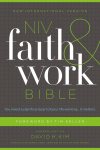
The Green Room welcomes Joseph Sunde with his review of the NIV Faith and Work Bible, reprinted from the Acton PowerBlog. Joseph Sunde is a writer and project coordinator for the Acton Institute, editor of the For the Life of the World: Letters to the Exiles blog and content manager of the blog Oikonomia at Patheos.com. He resides in Minneapolis, Minnesota with his wife and…
ANTANANARIVO, Madagascar – As I sit here in awe at the fruitfulness of a business as mission (BAM) program in its sixth year of growth, Biblical Entrepreneurship, I ask myself, “How did this work 25 hours away by plane, and worlds away in culture and language, ignite our church to get serious about the faith and work movement?” At the…
Chris Horst is the vice president of development for HOPE International. He is passionate about issues of faith and entrepreneurship. He is also the author of Mission Drift and Entrepreneurship For Human Flourishing. He blogs regularly and has recently posted an article reflecting on his early jobs and the importance of work. Horst discusses a job he had at a friend’s…
The Oikonomia Network has recently produced some great videos with different leaders in the faith and work movement speaking on the integration of faith and work from their research and study. These videos are intended to be used in the classroom as well as in the church and other instructional settings where people faith can learn about the integration of their faith with all parts of life.
Chris Armstrong is the founder and director of Opus: The Art of Work based at Wheaton College. Previously, he directed the Bethel Work with Purpose Initiative as well as was professor of church history at Bethel Seminary (St Paul, MN). In addition to Chris’ current work with Opus, he is Senior Editor of Christian History Magazine.
Chris spoke on the topic of vocation from his life, the Bible, and church history. He began with passion and vulnerability, recounting lessons he learned on the value of work and the apparent problem of “work-life balance.”
As a child of the 70’s, Chris confesses to having had a laissez faire view toward work: “Labor is a life-destroying activity.” This attitude would soon put him in a hard place, as during the first few months of his marriage, he was forced to turn to family for financial support. This uncomfortable interlude ended only when one of his college professors offered him a full-time job at a language school.
What strikes me from this story is the sense of self-worth and dignity that Chris felt after he started this job. He had co-workers who now relied on him. He had a sense that he was contributing to the world in a new way. In fact, on most days he could not wait to get to work. If you would have told the younger Chris he would one day have this kind of anticipation for work, he would have thought you were crazy.
“The 70s had lied to me. Work wasn’t life-destroying. It was interesting, energizing, and rewarding.” -Chris Armstrong
At this point, you might think that everything was in order for Chris and he simply proceeded with his work and family life helping everyone in his life to flourish. But soon the flip-flop from dismissal to obsession with work was complete, as he ran up against what his church called “work-life balance issues.” He was told, like so many of us, to put God first, family second, and work third.
But, Chris asks, “Is ‘work-life balance’ really the problem?” Life is not normally as neat and tidy as the simple priority of God over family over work implies. Colossians 3:23 shows a different, more holistic picture: “Whatever you do, work heartily, as for the Lord and not for men… (ESV)”
To illustrate, Chris took us back to some 16th century “work-life struggles,” as addressed by a little-known monk named Martin Luther (!). In response to the way that era saw only monks and priests as having vocations that mattered to God, Luther proposed the radical idea that all work can be God’s work regardless of its apparent sacredness or status.
“When a prince sees his neighbor oppressed, he should think: That concerns me! I must protect and shield my neighbor….The same is true for shoemaker, tailor, scribe, or reader. If he is a Christian tailor, he will say: I make these clothes because God has bidden me do so, so that I can earn a living, so that I can help and serve my neighbor. When a Christian does not serve the other, God is not present; that is not Christian living.” -Martin Luther
What Luther and Armstrong are saying is that all kinds of work, even the mundane, can be done in obedience to God and in service to others. Luther used the word vocation to refer to this work. Unfortunately, words like vocation–as well as stewardship, flourishing, and culture–have been watered down and devalued. From Luther, to Adam and Eve in the garden, to the 6th-century pope and spiritual writer Gregory the Great, Chris unpacks the meaning of the Christian concept of vocation.
I want to note one other important point from Luther’s discussion of vocation: it embraces work done in the home as well as in the marketplace.
My friend Tom Nelson uses some helpful words to describe work. He discusses work in terms of contribution and remuneration. Some work involves contribution to an organization while other can result in remuneration. Both are of equal importance, though work that involves remuneration is oftentimes valued more. Luther and Nelson would both agree that both types of work are critical to flourishing.
As we reflect on the history of the faith and work movement and look toward its future and legacy, the topic of vocation properly defined is a critical area for continued study, reflection, and education. We as leaders need to correctly understand this so that God can use us to teach its importance and relevance to our students as well as the people in the pew.
I’ll leave you here with Armstrong’s closing words:
Now, in my fifties, I’m finally reallyhearing and acting on the “whatever you did” of Jesus, and the “whatever you do” of Paul. I’m hearing Luther’s call to love my neighbor through ordinary work, and Gregory’s call to let my devotion prepare me for my work, and my work for my devotion. Can you hear it too?
Please watch this brief (16-minute) video and share with like-minded folks in your network. If you’re interested to read more about vocation, I’d refer you to Working for Our Neighbor: A Lutheran Primer on Vocation, Economics, and Everyday Life, by Gene Edward Veith.
In addition to featuring thoughtful commentary on the future of the faith and work movement, The Green Room periodically wants to share reports from faith and work meetings you may have missed. (Don’t want to miss any more faith and work meetings? Check out our event calendar.) We recently had a report on the Avodah Summit at Trinity International University:…








 The Green Room