
By Charlie Self, reprinted from the Oikonomia Network.
The Economic Wisdom Project is best known for our Economic Wisdom Project Talks, which are short, accessible, engaging and rich presentations suitable for use in classrooms and group discussions. But the EWP also features print resources, including our vision paper and our twelve elements of economic wisdom.
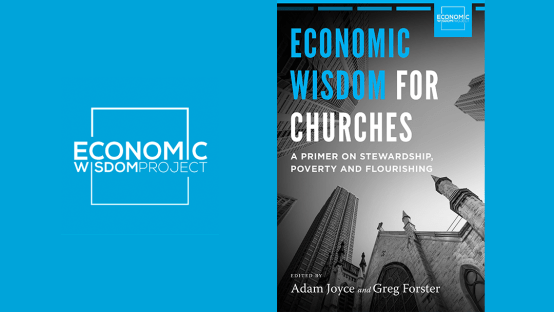
Economic Wisdom for Churches, our EWP book, is a small volume that packs a big punch. It features essays for local church leaders on critical issues facing their churches by Amy Sherman, Scott Rae, Tom Nelson, Charlie Self, Zachary Ritvalsky, James Thobaben, Jay Slocum, Jordan Ballor, Greg Forster and more. The essays are short and accessible enough to read through quickly, but offer the depth and insight to reframe the challenges churches are facing in their communities, overcome the paralysis of our polarized society, and bring the holy love of God out into our world.
The eBook is available for purchase from Amazon. For hard copies, contact us.
Below is an excerpt from a chapter in Economic Wisdom for Churches. Citations have been omitted.
Responsible Action: How Do We Serve the Common Good?
Charlie Self
Faithful churches create flourishing communities. The joy, peace and righteousness we have in Christ transform our lives and our churches. But they also flow outward into the lives of our communities as we serve the common good – rejoicing in good work, promoting reconciliation and standing up for justice….
Their community ethos is rooted in the apostle Paul’s poignant summary of Romans 14:17-18: “For the kingdom of God is not a matter of eating or drinking, but of righteousness, peace and joy in the Holy Spirit, because anyone who serves Christ in this way is pleasing to God and receives human approval.” Joy, peace and justice offer a framework for reflection on the effectiveness of the mission of the local church. These concepts provide the pathways and principles that translate into community flourishing as the local church faithfully carries out its mission.
Joy, from the Gospel to the Common Good
Joy begins with God’s delight in his creation and particularly in his people (Genesis 1-2). We serve a Lord who “rejoices over us with singing” (Zephaniah 3:17). And in the imagery of the Hebrew language, our God “dances over us with joy.” Jesus rejoiced deeply when his followers returned from their missionary venture (Luke 10-11). The assurance of salvation through the cross and resurrection of Jesus is the source of the believer’s joy (Romans 5:1-5; 1 Peter 1).
Ajith Fernando, a Sri Lankan Youth for Christ leader, facing enormous material and spiritual challenges, has the wisdom to share that is the midst of suffering, Christians can know joy because of their identity in Christ. [Ajith Fernando, The Call to Joy and Pain] Nothing is greater than being embraced by God, becoming a part of God’s people, and participating in God’s work in the world. The joy of delighting in God and his salvation and a new sense of fellowship with others is life-giving and empowering.
Stimulate insight and engage students by assigning one of our exciting and catalytic EWP Talks! Vincent Bacote on sending disciples to a pluralistic world:
Another joy is part of the kingdom, if we can see it: the joy of meaningful daily work. Looking forward with purpose to Monday morning is vital for discipleship, human flourishing and the common good. Understanding our daily work as part of God’s economy and appreciating the “pebble in the pond” impact of our simple tasks are transformative for how we see our lives and discipleship.
At this juncture, it is important to define “work” and “the economy” to dispel inadequate concepts and ideologies. Work is all meaningful and moral activity apart from leisure and rest. The economy is the moral and social system of local and global exchange. We all participate in several economies as we spend most of our waking hours working. Note that work is not merely for pay, but embraces all our efforts – at home or volunteering, factory and field, labor or leadership. What matters to our Lord is the value we create, not just the money we may make. Yes, ethical wealth creation is good and profits matter. But many people spend their days patiently serving the elderly, toiling at repetitious tasks, or conversely, making decisions that affect thousands. All of these expressions of work have value.
For over two decades, a parking garage attendant at San Francisco International Airport caught the attention of drivers as they arrived. He wore white gloves, played upbeat music and directed the cars through the construction maze with a cheerful smile, kind words and physical enthusiasm. Everyone smiled or laughed out loud as they parked. When the local paper interviewed him about why he did his work with such joy, he offered these thoughts:
Everyone comes to the airport with stress. Even if the news is good and the kids are coming home, there is still a lot of emotion. For most people airports are difficult places to be, especially with parking garages always under construction and the poor signage everywhere. If I can bring a little joy, lift a burden, put a smile on their faces, I have made a positive difference. Every day I see hundreds of cars, maybe more. I think the world is a better place with hundreds of smiles.
Later in the interview, the reporter found out that the attendant was a deacon at his local church and enjoyed being an usher, greeting people every week and helping them find their way to the pew or the classroom, the restroom or the prayer room.
Pastors and all congregational leaders must “count” this brother’s daily work as equally important alongside his Sunday ushering. An ethos of whole-life discipleship that integrates flourishing, faith, and economic wisdom will develop new “kingdom metrics” for celebrating good work in all domains. Imagine a Sunday morning with testimonies that celebrate the church’s new student leadership team and the new public school board member; a worship service that praises God for a business owner able to hire two new employees as well as the two new pastoral team members.
Anthony Bradley on how to preach a public faith without making atheists:
Pastor Kent Duncan of Jefferson Assembly of God leads a church full of blue-collar workers. They love God, but like so many of their peers, they often see their work as a means to a wage as they live for the weekend. Over a period of several months, Pastor Kent embarked on a journey of infusing biblical meaning into their daily work. At the end of this process, several gave testimonies of transformation. One worker said that his “world got bigger.” Another realized that his simple job (putting labels on dog food cans) contributed to the good of families and the world. A woman in the congregation felt empowered to seek out a promotion.
By placing work within the normal discipleship processes of the church, Pastor Kent connected Sunday worship and Monday work, infusing hopeful realism into the hearts of the community.
To read more, purchase Economic Wisdom for Churches.
 The Green Room