
By Zachary Ritvalsky, reprinted from the Oikonomia Network.
The Economic Wisdom Project is best known for our Economic Wisdom Project Talks, which are short, accessible, engaging and rich presentations suitable for use in classrooms and group discussions. But the EWP also features print resources, including our vision paper and our twelve elements of economic wisdom.
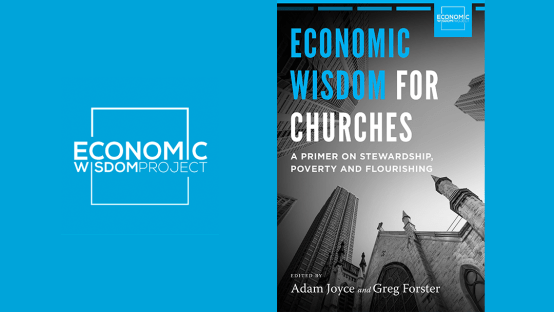
Economic Wisdom for Churches, our EWP book, is a small volume that packs a big punch. It features essays for local church leaders on critical issues facing their churches by Amy Sherman, Scott Rae, Tom Nelson, Charlie Self, Zachary Ritvalsky, James Thobaben, Jay Slocum, Jordan Ballor, Greg Forster and more. The essays are short and accessible enough to read through quickly, but offer the depth and insight to reframe the challenges churches are facing in their communities, overcome the paralysis of our polarized society, and bring the holy love of God out into our world.
The eBook is available for purchase from Amazon. For hard copies, contact us.
Below is an excerpt from a chapter in Economic Wisdom for Churches. Citations have been omitted.
Responsible Action: How Do We Serve the Poor?
Zachary Ritvalsky
My community includes people who are both materially poor and “poor in spirit.” However, what exactly does it mean to say that people are “poor in spirit”? To be “poor in spirit” is not the same as being economically poor, yet both kinds of poverty matter, and the church must address both. In his commentary on Matthew, John Nolland interpreted the phrase like this: “The poor in spirit would be those who sense the burden of their present (impoverished) state and see it in terms of the absence of God; who patiently bear that state, but long for God to act on their behalf and decisively claim them as his people.” [The Gospel of Matthew, p. 200-201]
Nolland understands the poor to be the impoverished who are looking for God to rescue them from their poverty. This means the church, as God’s representative here on earth, has the responsibility to do the same. Therefore, one of the first ways we can serve the poor is by genuinely loving them. I know this sounds like an overly simplistic cliché, but we need to love the poor as much for them as for ourselves (Leviticus 19:34, Deuteronomy 10:19).
Stimulate insight and engage students by assigning one of our exciting and catalytic EWP Talks! Christopher Brooks on Rethinking Urban Poverty:
Pastor Jim Cymbala, in his book Fresh Wind, Fresh Fire, shares the story of a homeless man who came to his church on Easter. The day had been long, and, after the final service, the man, bearing the proof of his homeless condition, approached Pastor Cymbala, who responded to his presence as many of us probably would have. He reached into his pocket to give the man a few dollars to which the man replied – “I don’t want your money preacher, tell me about this Jesus you preach.” At that moment, Jim Cymbala said, “The smell of the street became the aroma of a garden.” How we love the poor is a clear indicator of how we understand God’s love for us. Too often, in misunderstanding God’s love we make the poor the object of our charity, the front cover of our programs, the focus of our grant requests, or the target audience to fill our seats. We make them listen to sermons before we feed them, ask them to join the church before we clothe them. We use them as objects instead of people loved through us. God is love, and by being endowed in his image, as they are, we ought to love them for who they are in God’s kingdom here on earth. It is important to do this because Jesus loved them enough to die on the cross for them. Furthermore, we must not minister through judgmental eyes that seek to make them conform to our mold. Our love must allow room for us to blend our respective contexts and lives without compromising who God has created either of us to be. We must not simply make paternalistic corrections, as if we know what’s best for them. No, our love needs to be every bit of the unconditional love described in I Corinthians 13 and displayed throughout Jesus’s earthly ministry.
However, real love is not just a feeling but an attitude expressed by action. Jesus’s love expressed itself through his work on the cross (John 3:16; Romans 5:8; I John 3:16). Therefore, if we are to serve the poor by loving them, that love should be expressed in actions that address their predicament. Therefore, through what sort of actions does this love express itself? After all, don’t believe for a moment that anyone poor wants to be poor.
First, we need to educate the poor about the Bible’s storyline, and I don’t mean through the sound bites and video clips that all too often characterize Sunday morning. We must help them understand the metanarrative of scripture, what Vaughan Roberts calls “God’s Big Picture.” This sense of the Bible’s storyline informs the poor that when everything is said and done, they win because Christ won the victory over sin, death, and the grave. The “not yet” of the kingdom in the Bible’s story speaks about foundations made of precious stones, gates of pearls, and streets of gold as the new Jerusalem comes from heaven to earth. The poor need to know that poverty is not forever when you’re in Christ.
Second, we need to educate the poor and our youth in preparation for the current and future job market. We need to advocate for better education, including vocational skills training in step with the market. This means we need vocational high schools that link students to sponsors who will provide on-the-job training so students can graduate from high schools with life skills, trades, and, hopefully, jobs. Not everyone is going to college, and this means an increase in education funding. The church should be working in the public square to make this happen. Local entities like Philadelphians Organized to Witness Empower and Rebuild (POWER) along with national organizations like PICO National Network are comprised of churches on the cutting edge of social justice in education.
Jules Martinez on making the kingdom visible through reconciliation that impacts the world:
For people already out of high school but still lacking marketable skills, the church may need to be the catalyst for bringing together businesses and employee prospects in training programs. Reverend Leon Sullivan did this with the Opportunities Industrialization Centers of America, which he started in an abandoned jail in 1964 while he was pastoring Zion Baptist Church in Philadelphia. Using Reverend Sullivan’s logic, our church launched H-CLIP, or the HMC2 Community Life Improvement Program. H-CLIP was a pilot intended to equip young adults with academic skills, life skills, and carpentry skills. The students would develop their carpentry skills while renovating abandoned community properties that were donated by the local housing authority. Partner organizations supervised the life skills and academic training. Successful graduates would have the option to test for the carpenter’s apprenticeship program, to start their own small businesses with assistance from the local enterprise center, to continue their education at local trade schools, or to seek employment with local contractors in the community. Sadly, most of the program’s young men failed to satisfy the graduation requirements, which included passing the General Educational Development (GED) test. Personal life circumstances played a large part in the end, and we’ll need to be better equipped to handle this in the next class. However, I am glad to say two men did make it through to the program’s conclusion, finishing all the requirements and passing the carpenters’ union apprenticeship exam. For two years now, these two men have been working and, along the way, have received pay increases based on the hours they’ve worked. They’re now making a livable wage. We’re not discouraged by the results, but encouraged by the lessons learned and the success of two graduates from the program.
To read more, purchase Economic Wisdom for Churches.
 The Green Room