
By Amy Sherman, reprinted from the Oikonomia Network.
The Economic Wisdom Project is best known for our Economic Wisdom Project Talks, which are short, accessible, engaging and rich presentations suitable for use in classrooms and group discussions. But the EWP also features print resources, including our vision paper and our twelve elements of economic wisdom.
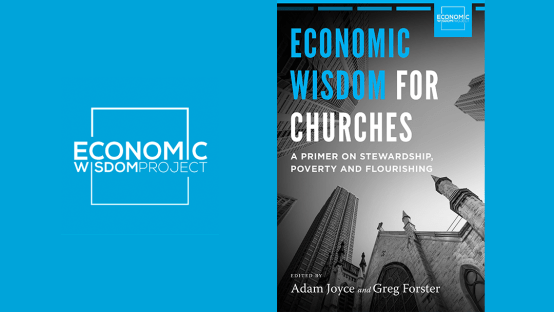
Economic Wisdom for Churches, our EWP book, is a small volume that packs a big punch. It features essays for local church leaders on critical issues facing their churches by Amy Sherman, Scott Rae, Tom Nelson, Charlie Self, Zachary Ritvalsky, James Thobaben, Jay Slocum, Jordan Ballor, Greg Forster and more. The essays are short and accessible enough to read through quickly, but offer the depth and insight to reframe the challenges churches are facing in their communities, overcome the paralysis of our polarized society, and bring the holy love of God out into our world.
The eBook is available for purchase from Amazon. For hard copies, contact us.
Below is an excerpt from a chapter in Economic Wisdom for Churches. Citations have been omitted.
Flourishing: What Is Good for Us?
Amy Sherman
There’s a lot of talk about “flourishing” these days. Everybody wants flourishing, but it makes a huge difference what we mean by that. Very few of our personal and public problems arise from people not wanting to flourish; most of them arise from people seeking the wrong kind of flourishing. Helping people see the difference between real flourishing and false flourishing is one of the most important things followers of Jesus can do to serve the kingdom of God and the common good.
My friend G’Joe recently told of an encounter he had with a young clerk at the Speakeasy Clothing store in San Diego. He was killing time for a few minutes before a meeting, and she was friendly and chatty. Given G’Joe’s winsomeness and wit (not to mention his good looks), it’s no surprise she was ready to talk. The conversation ranged from work to race to religion – the latter prompted by her inquiry of whether G’Joe was a Buddhist.
G’Joe says his thoughts went to C. S. Lewis. “I told her, ‘I actually believe that my God has given us desire and wants us to know him through enjoying and delighting in his gifts.’” Taken aback, the young woman exclaimed, “I’ve never heard anyone talk about Christianity like that!” And, to G’Joe’s glee, she asked: “Could I come to your church sometime?”
Stimulate insight and engage students by assigning one of our exciting and catalytic EWP Talks! Charlie Self on faithful churches creating flourishing communities:
The clerk’s reaction reveals at least two realities. First, she hungers for pleasure, and that’s in part because God designed her (and all of us) for it. Second, she hungers for pleasure because her heart (like all of ours) is a desire factory, and it’s fueled by the relentless siren song of our intensely commercial and self-indulgent culture.
Whether she can articulate the words or not, this young woman wants to flourish.
It’s not hard to imagine that she grasped G’Joe’s words at a shallow level. That is, a religion that offered her gifts and fulfilled desires (as defined by the truncated imagination of her fallen self) sounded deliciously attractive. This – emphatically – should not lead us to conclude that we should avoid using words like “pleasure” or “beauty” or “delight” when talking about our Christian faith. Jesus was too much a lover of a human life fully lived to justify that and the creation, though marred, shouts these words. Simply think of the most recent time you enjoyed a fantastic meal, a stunning sunset or good sex with your spouse.
Tom Nelson on faithfulness and fruitfulness:
What’s needed is the expansion of this young woman’s imagination to help her understand her deepest longings and desires. Augustine, that great theologian of desire, famously reminded us that our hearts are restless until they find their rest in God. All the food, natural beauty and sex in the world won’t truly satisfy us because we are made for more. We are made for God and for others.
To read more, purchase Economic Wisdom for Churches.
 The Green Room