By David Williamson.
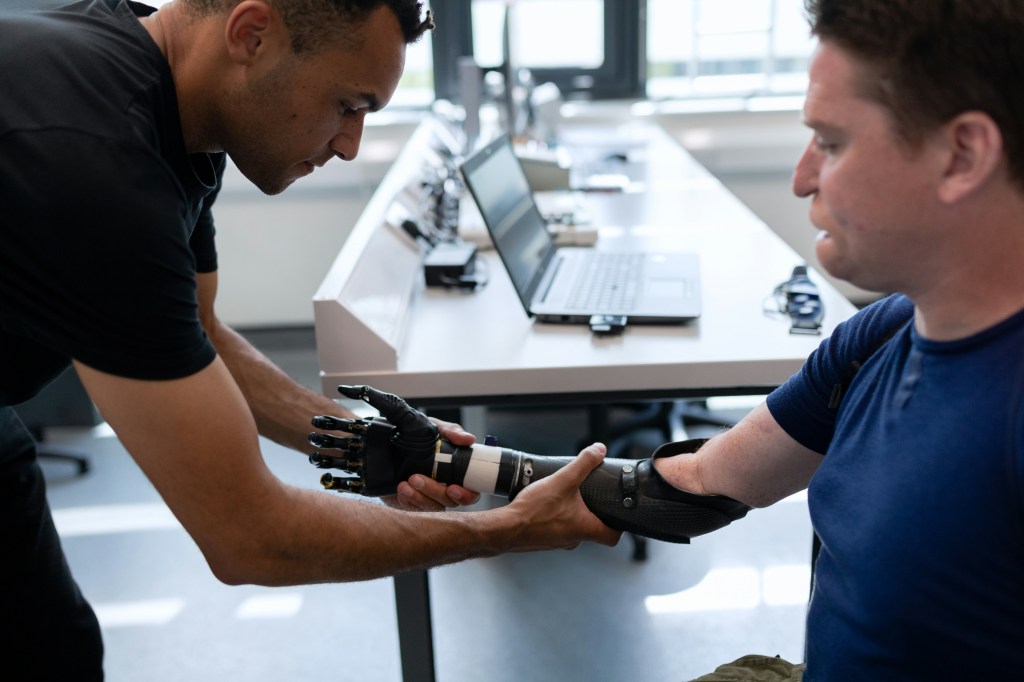
A friend who is a prosthetics surgeon is now in Ukraine providing prosthetics for people who have lost body parts as a result of war. He is doing important, exceptional work as a believer in Jesus.
He has reminded me that Jesus made the lame and the blind a major part of his work. He promoted the dignity of each individual. At the same time, the Bible also reminds us that God’s power is made perfect in our weakness. “God has blessed my work”, he has said, adding, “I have the ability of a doctor, yet I am dependent on the prayers of others, and God brings the two together – professional skill and the prayers of the faithful.”
This kind of work has always been an unfortunate necessity in a fallen world, and I have developed a modest but deep appreciation for its important implications. I have cousin who fitted prosthetics as part of the team of a prosthetics manufacturing company. And I have another friend who functions effectively with a prosthetic forearm as a result of the Viet Nam War.
For my friend with the prosthetic forearm, using an artificial hand is itself a skill – a very distinct form of work done under God’s calling. With his prosthetic hand, he is able to do almost anything the rest of us do, and live fairly “normal” life. He fully enjoys living into his callings as an active husband, father, grandfather and friend to many.
Things are different for the prosthetic surgeon working in the primitive conditions of a war-zone hospital in Ukraine. But he demonstrates a clear calling in his work. God has equipped him through natural gifts and years of specialized training. And he also needs to understand the overall well-being of each person receiving a prosthesis, so it is psycho-social and spiritual work as well as medical.
Similarly, the loss of a limb is not just physically traumatic. It also deeply affects the patient’s social and spiritual life. Often, they have been “amputated” from their community an even from their family. The amputation and the prosthesis change the capacity to drive, shop for food, go to school, and participate in usual social activities. Friends and family members may be reluctant to have ordinary conversations, out of their own fear of not knowing what to say or how to interact. The amputee may feel isolation, also not knowing what to say or how to react, feeling ostracized and alone. For some amputees, this experience is even more difficult to deal with than the loss of a limb.
My cousin the prosthetic fitter also needed to be sensitive to the personal daily functioning of recipients – serving spiritual as well as physical needs. He quietly did this. It was an extension of his personhood into his work. He was sensitive to the personal, emotional and spiritual need of each individual he worked with – working with as much as working for the person being fitted. I think his faith and the faith heritage of his family was seen in this.
This is perhaps a unique kind of challenge for a prosthetic surgeon who is also a thoughtful follower of Christ, in any situation but especially in a war zone. Critical decisions about where to cut and what to maintain of the original part are required, along with skillful knowledge of professional standards and the medical tools and techniques available. These are very personal issues for the amputee and the surgeon.
There is a sense of partnership with God in doing this work and making the decisions necessary. This calls for turning to God and trusting God’s presence to help give spur-of-the-moment wisdom – indeed, divine wisdom. My friend the prosthetic surgeon does this out of the core of his being. Praise God for equipping him, being with him in his work, and inviting us to contribute by our prayers!
 The Green Room