
By Ben Chang, reprinted from the London Institute for Contemporary Christianity.
“I think it’s important to think about GPT-4 as a tool, not a creature.”
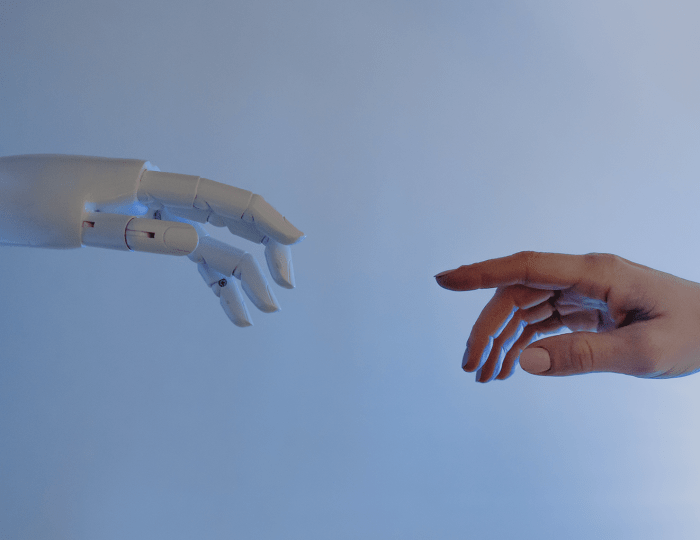
These were the words of Sam Altman, owner of ChatGPT, who recently announced the opening of his company’s first international offices in London. But is it adequate to view “artificial intelligence” as a mere “tool”? I’m not so sure.
I do agree that AI shouldn’t be characterized as a “creature” because I don’t believe AI will ever gain consciousness – the first-person experience of being oneself. Some naturalists argue that humans are simply mechanistic machines made of proteins, and so all human experiences, including consciousness, can be ultimately reduced to the products of electrical brain activity. And it’s only a matter of time before AI replicates this electrical activity.
However, in a biblical worldview, consciousness appears to be the result of non-physical elements breathed into our humanity (Genesis 2:7; Philippians 1:23–24). Therefore, no matter how complex its circuitry, AI will never become a living soul or gain consciousness.
Equally, I also don’t think AI can be seen as a mere ‘tool’. In his lecture The AI Dilemma, Tristan Harris (the creator of Netflix’s The Social Dilemma) describes social media as humanity’s “first contact” with AI. He highlights that social media has had cataclysmic and unforeseen consequences, from the adolescent mental health epidemic to the breaking of democracies.
The power of new AI technologies dwarfs that of social media. If uncontrolled, what are we potentially unleashing on humanity? It’s certainly not a mere new “tool.”
I suggest that we shouldn’t see AI as a creature or a tool, but rather as an entirely new incoming reality. Humanity’s “first contact” with AI changed nearly every element of life. Who knows what the “second contact” will bring?
That’s why I believe we need a new and comprehensive vision for what it means to live for Jesus in this new reality. How do we act with integrity when reality and fiction become indistinguishable? How do we establish authentic relationships when algorithms can replicate intimacy? How do we engage with corporations that transcend national legislations, and purportedly hold the power to destroy humanity?
For Christians in Big Tech, the urgent call is the prioritization of integrity, dignity, and responsibility over profit and hubris. And for all of us, we need to be prepared for this coming reality and willing to adapt in ways as yet unforeseen. Will we rise to the challenge?
 The Green Room